

Most marketers still treat attribution as a simple scorecard that hands credit to the last ad a customer clicked. That approach made sense when customer journeys were short and channels were few. Today the path from first impression to purchase often stretches across weeks, devices, and dozens of touchpoints. Full-funnel attribution exists to capture that complexity so teams can see which investments actually move people forward rather than merely claiming the final click.
Why Traditional Attribution Falls Short in Modern Journeys
Last-click and first-click models persist because they are easy to report and easy to defend in budget meetings. Yet they systematically undervalue the early interactions that create awareness and the mid-funnel experiences that build preference. A prospect may discover a brand through a podcast sponsorship, research it via organic search, engage with a retargeting sequence, and finally convert after reading a comparison guide. Under last-click logic the comparison guide receives all the glory while the earlier stages that made conversion possible receive none.
The distortion compounds when teams optimize solely against the credited channel. Budgets shift toward bottom-funnel tactics that harvest demand rather than create it. Over time the pipeline thins, acquisition costs rise, and the organization finds itself competing only for high-intent traffic that competitors also chase. Full-funnel attribution corrects this by distributing value according to the actual contribution of each stage rather than the convenience of a single rule.
Defining the Stages That Matter Most
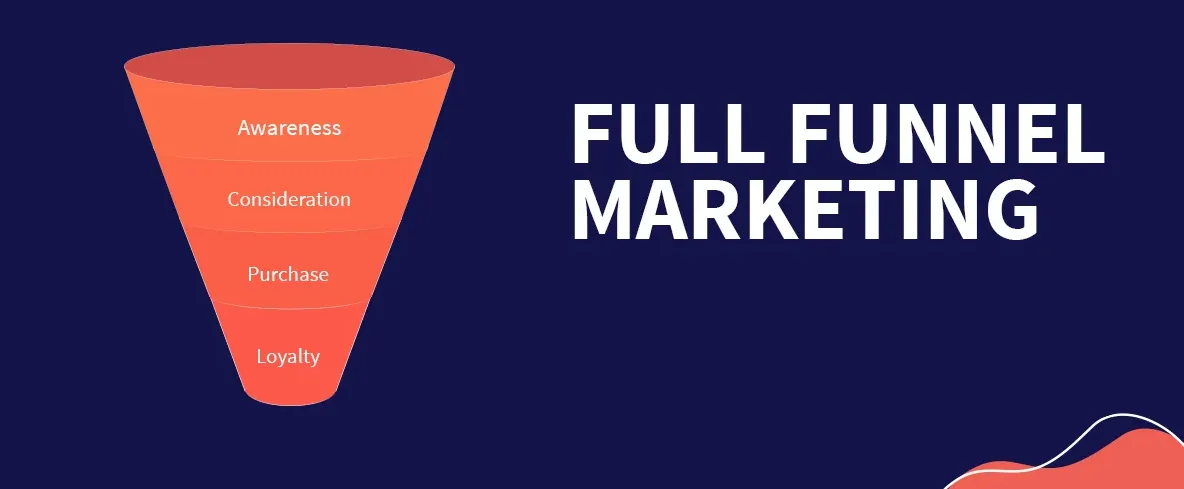
A practical full-funnel framework usually divides the journey into four interconnected phases. Awareness covers the first encounters that introduce the brand or category. Consideration includes the research and evaluation activities that help prospects form preferences. Conversion captures the moments of commitment—purchase, signup, or request. Retention and expansion track the post-purchase interactions that turn customers into repeat buyers or advocates.
These stages are not rigid silos. A single customer may move back and forth, and different products or audiences may emphasize certain phases more than others. The value of the framework lies in forcing teams to measure progress at each step instead of waiting for a final conversion event. When awareness metrics improve but consideration stalls, the problem is no longer invisible. When conversion rates hold steady while retention declines, the issue surfaces early enough to address.
Selecting Models That Reflect Real Contribution
No single attribution model fits every organization. Linear attribution spreads credit evenly across all touchpoints and works well when journeys are relatively consistent. Time-decay models give greater weight to interactions closer to conversion, which can suit businesses with longer consideration cycles. Position-based approaches, often called U-shaped or W-shaped, emphasize first and last interactions while still acknowledging the middle. Data-driven models use algorithmic analysis of historical paths to estimate incremental impact, provided the data volume and quality support reliable training.
The choice should rest on business reality rather than theoretical purity. A company selling high-consideration enterprise software may need heavier weighting on early educational content. An e-commerce brand with short purchase cycles may find time-decay more practical. Many mature teams run multiple models in parallel, comparing results to surface patterns that a single lens would miss. The goal is not perfection but directional accuracy that improves decision quality over successive planning cycles.
Closing the Gaps in Data Collection and Integration
Even the best model fails when the underlying data is incomplete or fragmented. Common obstacles include inconsistent tracking across paid, owned, and earned channels, limited visibility into offline interactions, and the growing impact of privacy regulations that restrict identifier matching. Cookie deprecation and platform-level changes further complicate deterministic linking of events to individuals.
Progress begins with disciplined instrumentation. Unique campaign parameters, consistent naming conventions, and reliable event tracking form the foundation. Server-side collection and first-party data strategies reduce reliance on third-party signals. Where deterministic matching is impossible, probabilistic methods and modeled insights can fill gaps without inventing false precision. The most effective organizations treat data quality as an ongoing operational priority rather than a one-time technical project.
Cross-channel integration remains equally critical. Marketing automation platforms, CRM systems, analytics tools, and advertising platforms rarely speak the same language out of the box. Creating a unified view requires deliberate mapping of identifiers, careful handling of identity resolution, and clear governance around how conflicting records are reconciled. Without that foundation, full-funnel reports become collections of disconnected snapshots rather than coherent narratives of the customer journey.
Turning Attribution Insights Into Budget and Creative Decisions
Attribution data only creates value when it changes behavior. The most useful applications appear in three areas. Budget allocation becomes more precise when teams can see the relative contribution of awareness and consideration activity rather than simply funding whatever drove last-click volume. Creative and messaging strategy improves when analysis reveals which themes or formats accelerate movement between stages. Channel mix decisions gain clarity when the incremental lift of less obvious tactics, such as brand partnerships or content series, becomes visible.
Leading teams also use attribution to set more realistic expectations for each channel. Upper-funnel investments rarely produce immediate conversions; their success should be judged by downstream effects on consideration and conversion rates over time. Lower-funnel channels should be evaluated for efficiency at capturing existing demand rather than for their ability to create new interest. When these distinctions are respected, resource allocation becomes less reactive and more strategic.
Building Organizational Alignment Around Shared Metrics
Technical capability alone is insufficient. Full-funnel attribution succeeds only when marketing, sales, finance, and leadership operate from a common understanding of value. That requires shared definitions of stages, agreed rules for credit assignment, and transparent reporting that shows both contribution and limitations. Regular review sessions that examine model outputs alongside qualitative feedback from customers and sales teams help keep the system grounded in reality.
Resistance often surfaces when attribution results challenge long-held assumptions about which channels “work.” Addressing that resistance requires patience and clear communication of methodology rather than defensive advocacy for particular numbers. Over time, consistent application of a well-understood framework builds trust that pure last-click reporting never could.
Sustaining Accuracy as Channels and Behavior Evolve
Customer behavior and media landscapes continue to shift. New platforms appear, privacy standards tighten, and buying processes adapt. A full-funnel system therefore needs built-in mechanisms for recalibration. Periodic audits of tracking coverage, model performance against actual business outcomes, and relevance of stage definitions keep the framework useful. Teams that treat attribution as a living practice rather than a finished dashboard maintain an advantage over those that set rules once and then ignore them.
The ultimate measure of success is not the elegance of the model but the quality of decisions it enables. When marketers can defend investments in early-stage work with evidence of downstream impact, when creative teams receive clearer signals about what advances prospects, and when leadership gains confidence that reported results reflect genuine contribution, the organization has moved beyond simplistic scoring toward genuine understanding of how marketing creates value across the entire journey.