

Most of us notice when a deodorant stops keeping us fresh. Far fewer notice when it starts quietly upsetting our skin. A little itch after applying, a sting on a shaving day, a patch that never quite looks normal. It’s easy to shrug these off as part of life.
Often they’re blamed on shaving, sweat or hot weather. Those can all play a part, but sometimes the real cause is the product you reach for every morning. Some reactions show up within minutes. Others creep in slowly over weeks of use.
Whether you use a classic antiperspirant or you’re trying natural deodorant uk brands, learning to read your skin’s signals can tell you when it’s time for a change.
Why Deodorant Can Upset Your Skin
Your underarms put up with a lot. They’re rubbed by clothing, often damp with sweat and shaved regularly. All of that makes the skin there more likely to react to what you put on it.
Fragrance and certain other formula ingredients can trigger problems in people who are sensitive to them. Reactions usually fall into one of two types:
- Irritant contact dermatitis, where an ingredient or repeated exposure wears down the skin’s protective barrier
- Allergic contact dermatitis, where your immune system reacts to one specific ingredient
Both cause similar discomfort. Working out which one you have, and what’s behind it, may need a professional’s help.
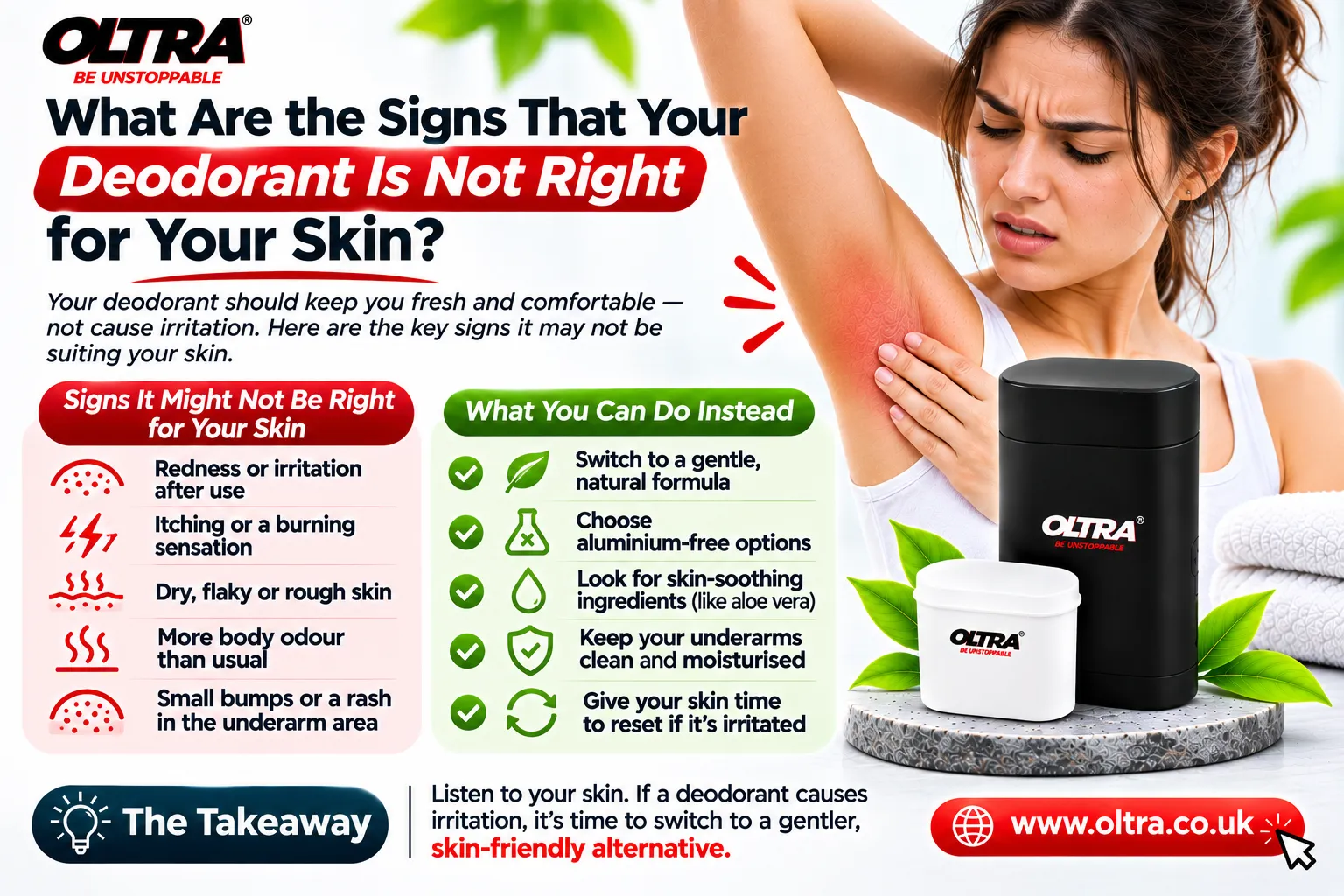
5 Signs Your Deodorant Isn’t Right for You
Your skin tends to drop hints before things get bad. Here’s what to watch for.
1. Itching That Keeps Coming Back
Everyone gets an itch now and then. But if your underarms reliably start itching after you apply deodorant, take note. Fragrance, preservatives or other ingredients could be involved.
A helpful test: does the itching ease when you stop using the product for a few days? If so, that’s a strong clue, although it doesn’t prove an allergy on its own.
2. Burning or Stinging When You Apply It
Does your deodorant sting as soon as it touches your skin? This is especially common right after shaving, when the skin barrier is temporarily weakened.
Putting product on freshly shaved or already sore skin makes stinging more likely. But if a deodorant burns again and again, even when you’re careful, it’s probably not the right one for you.
3. Redness or Inflamed Patches
Inflamed skin is a classic sign of irritation or contact dermatitis. On lighter skin, it usually looks pink or red.
On darker skin tones, inflammation may look brown, purple or simply darker than the surrounding skin, rather than obviously red. This means reactions can be easy to miss, so pay attention to how the area feels as well as how it looks.
If the patch gets more uncomfortable, stop using the product you suspect and get advice if it doesn’t settle.
4. Dry, Flaky or Tight Skin
Healthy underarm skin shouldn’t feel dry or tight every day after you apply deodorant. Repeated irritation, over-washing or certain ingredients can damage the skin barrier, leaving rough patches, peeling or a stretched feeling.
5. A Rash That Won’t Stay Away
Bumps, itching or inflamed patches that keep returning to the same spot after deodorant use are worth investigating. They may point to contact dermatitis, although other skin conditions can look similar.
Rather than cycling through product after product, consider getting professional advice if the rash keeps coming back.
The Ingredients That Most Often Cause Trouble
Not everyone reacts to the same things. Still, a few ingredients come up more often than others.
Fragrance and essential oils. Perfume ingredients are well-known triggers of allergic contact dermatitis. Essential oils count too, so a “naturally scented” product can still cause problems. Going fragrance-free cuts out a whole group of potential triggers.
Sodium bicarbonate. Baking soda helps natural deodorants neutralise odour. Many people get on with it fine, but it leaves others sore or itchy. If that’s happened to you, try a bicarbonate-free formula.
Alcohol, preservatives and plant extracts. Some alcohol-based products sting on damaged or freshly shaved skin. Preservatives and botanical extracts can also cause reactions in sensitive people.
The key takeaway? Natural doesn’t automatically mean gentle.
Does Going Aluminium-Free Help?
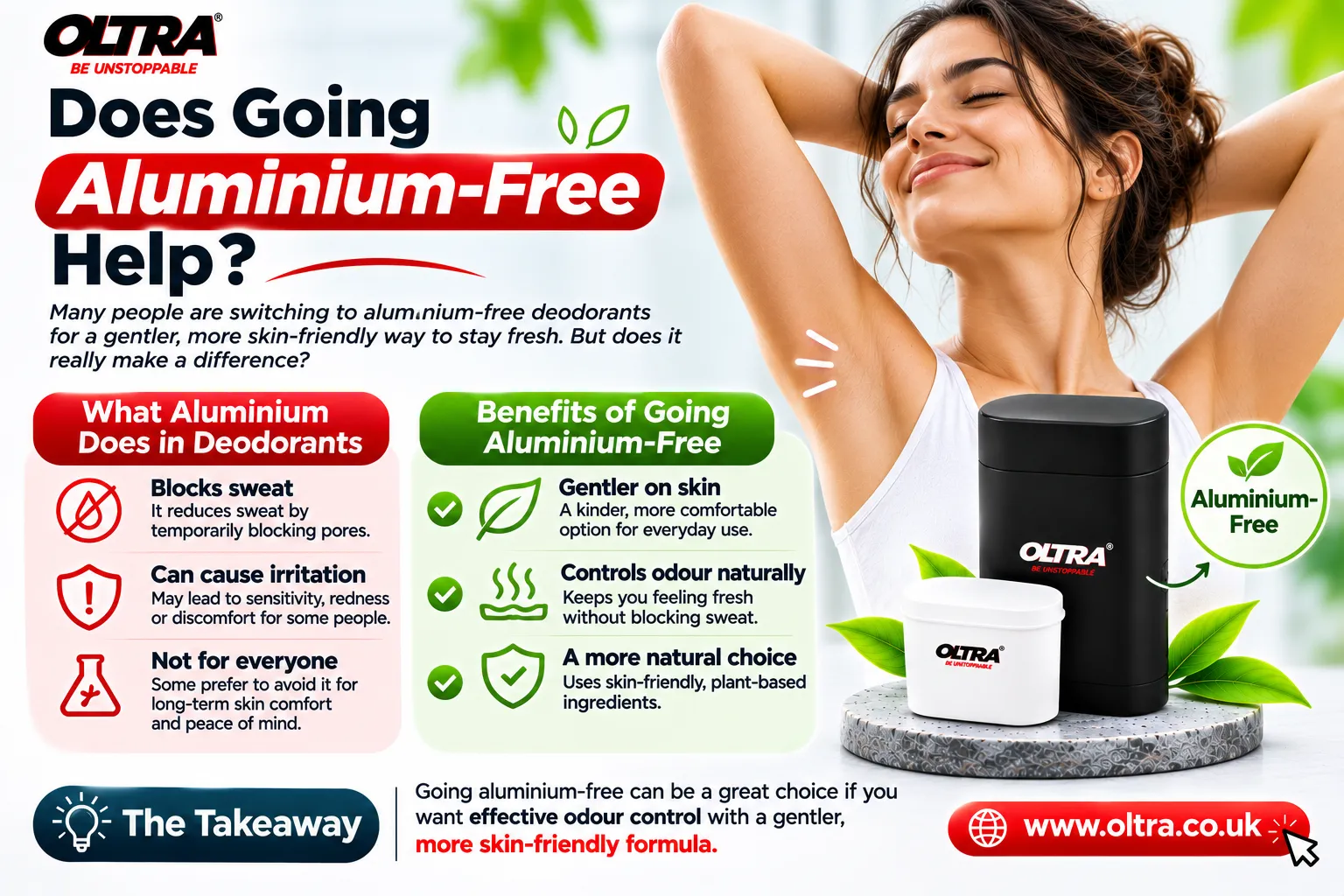
Many people looking for an aluminium free deodorant uk alternative want to step away from conventional antiperspirants. That’s a reasonable choice, but it helps to know what you’re getting.
Antiperspirants use aluminium salts to temporarily reduce sweating. Deodorants don’t stop sweat. They target odour while letting your body perspire normally.
An aluminium-free formula may suit your preferences, but it doesn’t guarantee gentleness. Fragrance, baking soda and other ingredients still need checking. For sensitive underarms, the full formula matters far more than one claim on the label.
How to Choose a Sensitive Skin Deodorant
The right sensitive skin deodorant isn’t necessarily the most popular one. It’s the one that matches what your skin can handle.
Compare old labels. Look at the ingredients of products that have caused problems and see what they have in common.
Try fragrance-free. If scented products keep irritating you, a formula without added fragrance is a sensible next step.
Don’t rely on “natural” alone. A natural label doesn’t mean a product suits eczema-prone or reactive skin.
Wait before trying something new. Give your skin time to recover first. If you keep having allergic reactions, ask a dermatologist whether formal patch testing would help.
What to Do If Your Deodorant Is Irritating You
Carrying on with a product that’s causing discomfort usually makes things worse. Instead:
- Stop using the deodorant you suspect.
- Wash your underarms gently, without scrubbing.
- Pause shaving while the skin is inflamed.
- Keep the area dry and wear loose clothing to reduce rubbing.
- Avoid introducing several new products at the same time.
- Speak to a pharmacist or GP if symptoms last or return.
Get medical help promptly if you notice severe swelling, spreading inflammation, significant pain or signs of infection such as warmth or pus.
Why Choose Us?
At OLTRA, we know that one deodorant can’t suit every underarm. That’s why OLTRA Guard gives you real choice.
- Natural and aluminium-free. OLTRA Guard manages body odour without blocking sweat, so your body can work as it should.
- Standard or Bi-Carb-Free. Prefer to avoid sodium bicarbonate? Our Bi-Carb-Free formula leaves it out.
- Fragrance-free Core. Our Core option has no added scent, ideal if fragrance has been a problem for you.
- Refillable applicator. Keep the applicator and simply replace the refill, instead of buying a new disposable container every time.
- Easy to compare. With different formulas in one range, it’s simpler to choose the one that suits your skin.
Everyone’s skin tolerance is different, and no deodorant can guarantee you won’t react. Check the ingredients of the formula you choose before use.
Frequently Asked Questions
What are the first signs of a deodorant allergy?
Itching, redness or a rash where you apply the product are usually the first signs. Allergic reactions can appear hours or even a day after application.
Can deodorant suddenly irritate skin after months of use?
Yes. Allergic contact dermatitis can develop after repeated exposure to an ingredient, even if you’ve used it without any problems before.
What does deodorant irritation look like on darker skin?
It may look brown, purple or darker than the surrounding skin rather than red. Itching, dryness or soreness can be more reliable signs.
Should you stop using deodorant if your underarms itch?
If itching keeps following application, stop using that product and watch your symptoms. Get professional advice if the reaction continues.
Is natural deodorant always suitable for sensitive skin?
No. Essential oils and baking soda are natural ingredients that can still irritate some people. The right formula depends on your own sensitivities.
Final Thoughts
Your deodorant should leave you feeling fresh and comfortable, not itchy and sore. Repeated itching, burning, redness, dryness and rashes are all signs worth taking seriously.
Rather than putting up with discomfort or switching brands at random, look for the ingredients that might be causing trouble and choose a product built around your skin’s needs. Listening to these early warning signs now can save you weeks of irritation later.